
"Chinese coffee consumption"
1000 article(s) found

Italy's Gima enters Zhejiang Exhibition as a thruster
In the high-consumption market of Zhejiang, many people like to drink coffee, especially in the metropolis Hangzhou. In addition to tea, coffee, especially boutique coffee, has become the first choice for many urban white-collar workers. There is a wide variety of coffee, and coffee brands in many countries are no stranger to people, but GIMA coffee from Italy is not famous in the Chinese market. But I have to say, this way

Jinuo intelligent coffee mill is popular in first-and second-tier cities in China.
More and more Chinese are beginning to sip Western drinks, and coffee is undoubtedly the first to bear the brunt. Relevant industry data show that the space of China's coffee market will continue to expand and will enter a period of rapid growth in the next 10 years. According to the London International Coffee Organization, compared with the global average growth rate of 2%, China's coffee consumption is growing at an astonishing rate of 15% a year. According to statistics, China's current
The soul maker of coffee, the barista.
Baristas refer to professional coffee-making service personnel who are familiar with coffee culture, production methods and skills. Since about 1990, the English word Barista has been used to refer to an expert in the production of espresso (Espresso)-related drinks. Italian Barista, corresponding to English bartender (bartender); singular and bisexual; plural positive baristi, plural negative bariste. Chinese

News about coffee-negative news about coffee falling in love with tea
News about coffee-negative news about coffee falling in love with tea according to an online survey: 47% of netizens like to drink instant coffee, while 72% value coffee taste the most. Chinese people's habit of drinking coffee probably began after the 1990s, and now many urbanites have become dependent on coffee. Although the annual consumption of coffee in China is only 200000 tons, the per capita consumption is delivered at a rate of 30 per cent.

The forecast of Chinese coffee market in the next 5 years: Starbucks will be out of date, and four major development trends will become the climate.
For professional baristas, please follow the coffee workshop (official Wechat account cafe_style) because tea has always been a monopoly in Chinese tradition, which makes the development of coffee in China extremely slow. With the change of public life and consumption concept, more and more people begin to fall in love with coffee. From 2011 to 2016, China's coffee market grew at a compound annual growth rate of 13.5%, and the market size in 2016.

Chinese prefer milk tea to coffee is related to caffeine content! Milk tea is more popular.
China as a traditional tea country, compared with coffee, more people still prefer tea-related drinks. For example, milk tea has become one of the favorite light caffeine drinks among contemporary young people, whether it is the stem of Jay Chou's drinking milk tea or the well-known in the recently popular variety show "my Sister through the Wind and waves".
Coffee consumption in China is growing by more than 40% a year.
It is reported that in recent years, China's coffee consumption has risen sharply, with an annual growth rate of more than 40%. It has become an important engine of global coffee consumption and attracted the attention of the world. In 2003, China's total coffee consumption was 19080 tons, double that of 1995, with an annual growth rate of 14.9%. The annual per capita consumption was 14.7g, 0.18% of that of Europe, 0.35% of that of the United States and 0.4% of Japan.
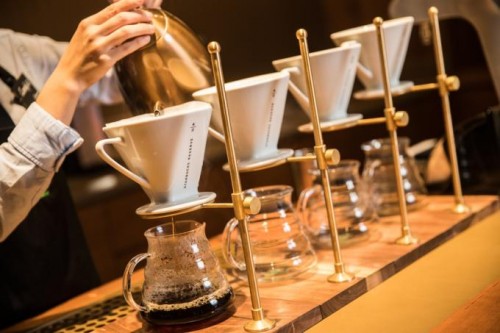
With the third wave of coffee revolution, China's coffee market will usher in a new round of local changes.
Communication of professional baristas Please follow the coffee shop (Wechat official account cafe_style) Wen / Zhu Danpeng I am not at home, in the coffee shop; not in the coffee shop, on the way to the coffee shop. Balzac who said this drank 50,000 cups of coffee in his life. Nowadays, coffee has become one of the most popular drinks in the world. According to the statistics of Euromonitor, except for a few sub-countries

Starbucks has expanded its stores by 70% in the past five years, hitting China's local coffee brands.
Full of confidence in the Chinese market, China's annual economic growth (GDP) fell to 6.9% in 2015 from 7.3% the previous year, the lowest level in 25 years. It is an indisputable fact that China's economic growth is slowing. However, Starbucks CEO Howard Schultz announced more than once that the company's market size in China will surpass that of the United States to become the world's largest market in the future.

Get an overview of the coffee industry
Coffee, as a traditional western drink, has a long history and cultural heritage. The world consumes at least 400 billion cups of coffee every year, and the current annual global coffee consumption is about 10 million tons. Coffee is the first of the two largest drinks in the world, and it is also the second largest trading commodity in the world after oil. China's coffee industry has been introduced and developed with the development of reform and opening up.
General situation of Coffee Industry
Coffee, as a traditional western drink, has a long history and cultural heritage. The world consumes at least 400 billion cups of coffee every year, and the current annual global coffee consumption is about 10 million tons. Coffee is the first of the two largest drinks in the world, and it is also the second largest trading commodity in the world after oil.

Ready-to-drink Coffee Market: a New Blue Ocean being excavated
In the past two years, when the whole beverage industry bid farewell to the golden era of high growth, coffee consumption showed a rapid growth trend, and China's coffee market is growing at an annual rate of 15% and 20%. Both the leisure coffee chain represented by Starbucks and the instant coffee represented by Nestl é have made rapid development. And the scale of China's coffee consumption market is about to break through.

Development trend of Korean Coffee Market in China? Basic information of Chinese coffee market?
Professional coffee knowledge exchange more information about coffee beans Please follow the coffee workshop (Wechat official account cafe_style) A large-scale coffee shop expansion is in the pipeline. Seesaw announced last month that it had received 45 million RMB A round investment from Baifu Holdings, which is owned by Hony Capital. The founder of another Shanghai boutique coffee brand, Yingji Coffee, said in a recent interview that it was preparing for 3.

The truth of Chinese coffee and the hidden rules of coffee investment what is the real standard of boutique coffee?
Professional coffee knowledge exchange more coffee bean information please follow the coffee workshop (Wechat official account cafe_style) China's coffee market and coffee consumption of the best era has really arrived? According to a survey conducted by Pindu think tank, the current size of China's coffee market is about 110 billion, which is far from the total market volume of 1 trillion. According to the old saying, the take-off of China's coffee market

China Coffee Industry Development report China is expected to become the world's largest coffee consumption market
Chen Zhenjia said in the release of "Coffee planting Distribution and advantageous Regional layout in China" that China's coffee producing areas are mainly distributed in Yunnan, Hainan, Sichuan, Taiwan and other regions. The tropical and subtropical mountain areas of southwestern Yunnan, northern Hainan and Tainan of Taiwan have better eco-environmental resources, which are very similar to the geographical environment and climatic conditions of Africa and Ethiopia, the origin of coffee.

General situation of Coffee Industry basic knowledge of boutique coffee
Coffee, as a traditional western drink, has a long history and cultural heritage. The world consumes at least 400 billion cups of coffee every year, and the current annual global coffee consumption is about 10 million tons. Coffee is the first of the two largest drinks in the world, and it is also the second largest trading commodity in the world after oil. China's coffee industry has been introduced and developed with the development of reform and opening up.

China's first Brazilian boutique coffee shop landed in Sinan residence in Shanghai
The coffee industry has developed rapidly in China in recent years. According to statistics, China's total coffee consumption has grown at an average annual rate of more than 20% in the past five years. From a world point of view, the average annual consumption of coffee in the world is 250 cups per capita, while that of Chinese mainland is only 4 cups. It can be seen that China is a market with great potential.

Market Survey and Prospect Consulting report of Coffee chain Industry in 2014-2016
At present, coffee consumption in China is still small, but the growth momentum is very considerable. With the popularity of coffee in China and the gradual expansion of consumers, the retail scale will maintain a momentum of sustained and steady growth. The China Business Intelligence Network predicts that by the end of 2018, the retail volume of coffee in China will be close to 65000 tons, and the retail sales will exceed 12 billion yuan. With the improvement of residents' income in our country, the quality of life

Analysis on the Development trend of domestic Coffee Industry in Chinese Coffee Industry Market
From the analysis of coffee production and consumption at home and abroad, we can see that the supply and demand of coffee in the world is basically balanced, but the supply of high-quality products still exceeds the demand. In order to meet the needs of the market, the foreign coffee growing industry tends to develop high-quality small-grain coffee. The demand for coffee in the domestic market is increasing, and there is a large gap between supply and demand. Therefore, our country still needs to import coffee raw materials and coffee products every year to meet the needs of the market. Yunnan
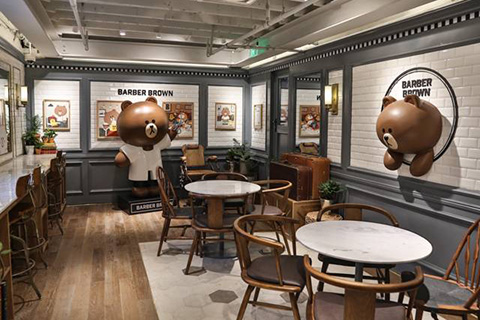
Comments | Why is the Korean cafe that once expanded crazily collapsed?
Korean coffee brands partnered with Chinese investors in 2012 to enter China by relying on the then popular Korean Wave and encroach on the Chinese coffee market in a frenzied expansion.